
ETP Aeration Roots Blower
Vapi — Only Local Manufacturer
GPCB Compliance · Emergency Same Day
Twin Lobe Roots Blowers for ETP and CETP biological aeration in Vapi GIDC and across Gujarat. R R Enterprise is the only local Roots Blower manufacturer in the Vapi–Silvassa belt. ISO 9001:2015 certified. MSME registered. Emergency replacement same day from our GIDC Vapi facility.
Wastewater & ETP
Tier 3 — Key R R Product PageWhy the ETP Aeration Roots Blower Is the Most Critical Equipment in Your Effluent Treatment Plant
Vapi GIDC is one of India's most chemically intensive industrial clusters. Every factory in Vapi GIDC that generates liquid effluent — chemical plants, pharmaceutical units, agrochemical manufacturers, food processors, textile dye houses, plastic plants, auto ancillary units — must operate an Effluent Treatment Plant (ETP) or discharge to the CETP (Common Effluent Treatment Plant) operated by VDPL (Vapi Drainage and Pollution Control Society).
The heart of any biological ETP is the activated sludge aeration basin, where aerobic bacteria break down the BOD (Biological Oxygen Demand) and COD (Chemical Oxygen Demand) in the effluent. These bacteria need a continuous, uninterrupted supply of oxygen. The Roots Blower provides this oxygen by forcing air through diffusers submerged at the bottom of the aeration basin, creating fine bubbles that transfer oxygen to the water. The Roots Blower runs 24 hours per day, 365 days per year, without stopping. No other equipment in the ETP is as critical or as continuously loaded.
R R Enterprise manufactures Twin Lobe Roots Blowers for ETP aeration at our ISO 9001:2015 certified facility in GIDC Vapi and is the only local Roots Blower manufacturer in the Vapi–Silvassa belt. When a factory ETP blower in Vapi fails, we can provide emergency repair or a replacement unit from our local workshop — the same day in most cases.
Powder Coating Process Flow – Where Compressed Air Is Critical at Each Stage
Collection Sump
Raw effluent from factory collectedPrimary Treatment
pH correction, coagulation, settlingAeration Basin
↑ ROOTS BLOWER HERE ↑ 24/7 oxygen supply for bacteriaClarifier
Treated water separated from sludgeDischarge / CETP
Consent-compliant treated water3 ETP Aeration Problems That Are Specific to Factory ETP Operators in Vapi GIDC
These problems are specific to ETP operators and wastewater treatment plant managers. They are not shared with production plant maintenance engineers.
Paint Manufacturers Need Oil-Free Process Air – Oil Contamination Affects the Entire Paint Batch
In a paint manufacturing plant, compressed air is not just used for spraying the final product – it is used directly in the manufacturing process. High-speed dispersers use compressed air for the dispersion process. Paint is transferred from mixing tanks to filling lines using compressed air pressure. Liquid paint tanks are agitated using compressed air to prevent settling of heavy pigments. If the compressed air used in these process applications contains oil, the oil enters the paint batch during processing. Oil contamination of paint affects: the drying properties of the paint (oil extends the drying time unpredictably), the gloss retention of the dried film, and the adhesion of the paint to the substrate. A batch of paint contaminated by oil from process air represents significant product loss – the entire batch may have to be discarded if the oil contamination is detected during quality testing. For paint manufacturers in Vapi supplying to industrial customers with paint specification sheets, a quality failure in the paint film properties can result in paint being returned and the affected coating project having to be re-done. An oil-free compressor for all process air applications in the paint manufacturing plant eliminates this contamination risk entirely.
Powder Coating Job Shops Face Quality Failures at Every Stage When Compressed Air Is Wet
Powder coating involves a sequence of stages where compressed air is used at each step, and moisture at any stage compromises the final coating quality. In pre-treatment (degreasing and phosphating), moisture in the blow-off air used to dry the component between treatment stages re-wets the treated surface, preventing proper phosphate adhesion. In the powder spray gun supply, moisture in the compressed air prevents proper fluidisation of powder in the hopper, causes powder to clump in the feed hose, and prevents the powder from receiving a full electrostatic charge at the spray gun – resulting in uneven powder deposition and bare areas on the component. In the powder curing oven environment, powder-coated components that enter the oven with surface moisture from inadequately dried pre-treatment will develop adhesion failure – the cured coating blisters or peels within hours of cooling. A powder coating job shop typically handles 50–200 components from multiple customers in a single batch. One moisture-related coating failure affects the entire batch – all components from multiple customers must be stripped and re-coated. Stripping cured powder coating requires media blasting the entire coated surface, which is labour-intensive and time-consuming.
Compressed Air Pressure Fluctuations During Spraying Create Surface Defects Across the Entire Coated Area
In spray painting and powder coating, the coating is applied uniformly across the entire component surface in a single pass. Unlike a manufacturing defect in a machined component that is localised to one area, a paint or coating defect from compressed air pressure fluctuation affects the entire painted surface area. Compressed air pressure fluctuations during spray painting cause several surface defects: variation in atomisation quality creates an uneven spray pattern with non-uniform droplet size – resulting in orange peel texture; pressure drops during spraying cause the spray gun to "spit" large droplets onto the wet paint surface, creating craters; and pressure variation across the part gives uneven coating thickness with visible shading differences. For a paint and coating contractor applying protective coatings to pipelines or storage tanks, a surface defect visible to the client inspector means the entire coated area must be re-blasted and re-coated – doubling the labour cost for that section of work. A CP VFD screw compressor maintains consistent supply pressure throughout the spraying cycle, preventing the pressure fluctuations that cause surface defects.
Quality Failure & Profitability Risks in Paint & Coating Operations
How R R Enterprise Solves Each of These ETP Problems
R R Enterprise is the only Roots Blower manufacturer in Vapi-Silvassa. We carry emergency replacement units and critical spare parts (bearings, seals, gear oil) at our GIDC Vapi workshop. 1-2 hour response to Vapi factory ETPs. On-site blower repair for many failure types. Replacement unit delivery same day for Vapi locations.
R R Enterprise provides free ETP blower load assessment for factories whose production has grown since ETP commissioning. We calculate the current actual BOD/COD load, compare it to the existing blower’s oxygen delivery capacity, and recommend whether upgrading or adding a blower is required for GPCB consent compliance.
R R Enterprise recommends standby blower configurations for ETPs where single-blower failure risk is unacceptable. For factories that cannot justify a full standby blower, we maintain emergency replacement units at our Vapi GIDC workshop that can serve as a temporary standby unit during failure events.
Products for ETP and Wastewater Treatment in Vapi and Gujarat

Chicago Pneumatic (Authorised CP Dealer)
Authorised CP Dealer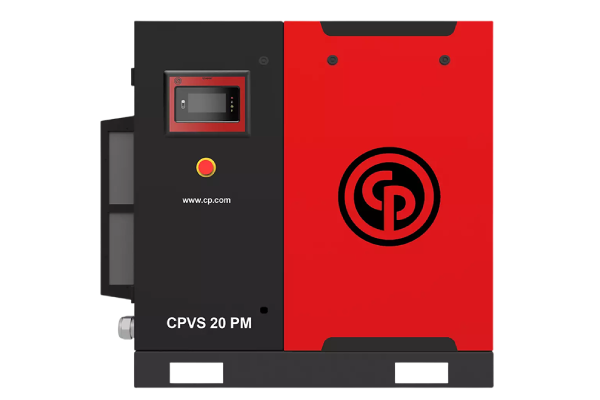
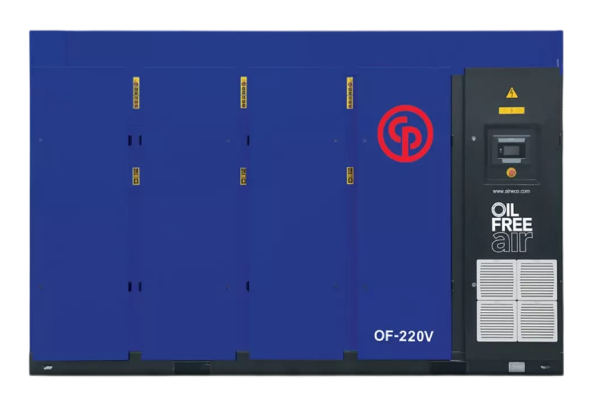
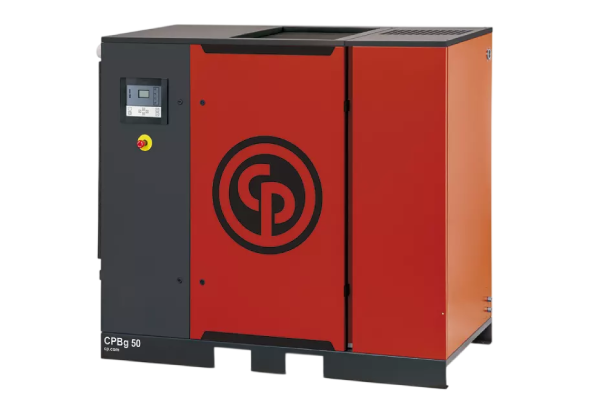
Fixed Speed Screw Compressor
For instrument air in large water treatment plants and Municipal ETPs with pneumatic control systems. Water treatment plant instrument air demand is relatively constant and predictable, making a fixed speed screw compressor with a refrigeration dryer the standard solution for instrument air supply.
View Details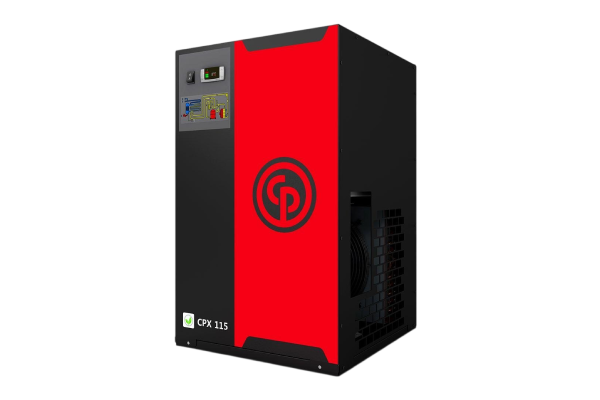
Refrigeration Air Dryer
For water treatment plant instrument air. Dry instrument air prevents corrosion of pneumatic control valve actuators and positioners in the humid water treatment plant environment. Essential for plants with pneumatic control systems for dosing pumps, sludge valves and effluent flow control.
View Details
R R Enterprise Manufactured Products
Manufactured Products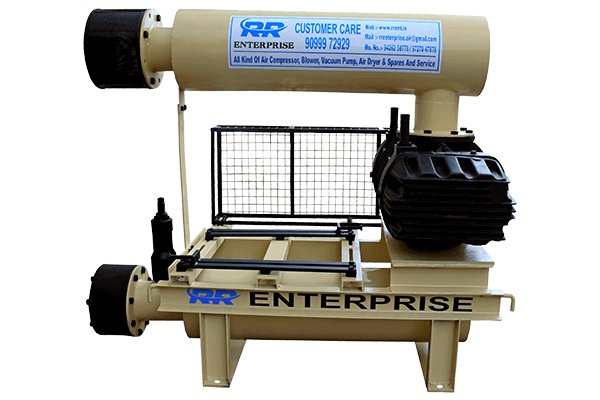
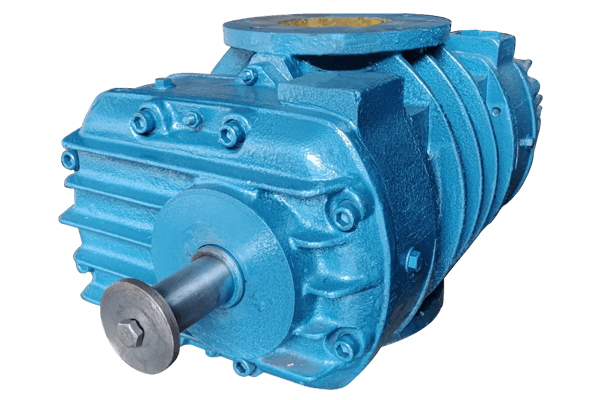
Twin Lobe Roots Blower – ETP Aeration
The primary and essential equipment for biological ETP aeration. Generates high-volume, low-pressure airflow (0.3–0.8 bar) continuously, 24/7, to maintain dissolved oxygen in the activated sludge aeration basin. Manufactured at R R Enterprise's ISO 9001:2015 certified GIDC Vapi facility. The only locally-manufactured Roots Blower in the Vapi–Silvassa belt. Emergency replacement and spare parts available same day. 5 HP to 100 HP. Pan India supply.
View Details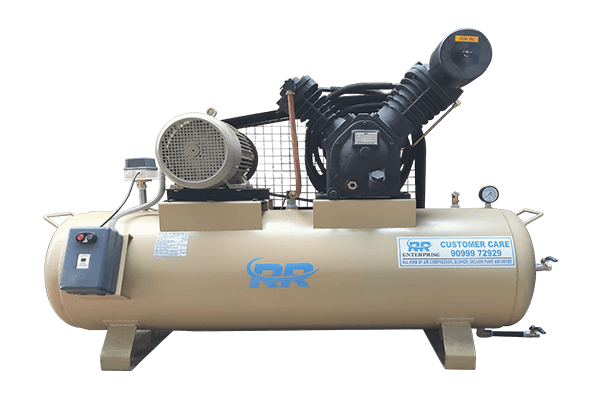
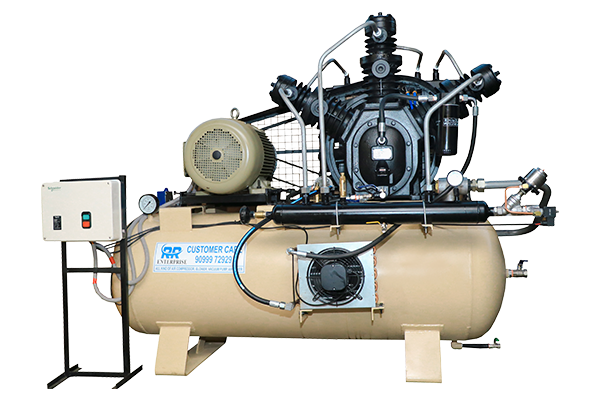
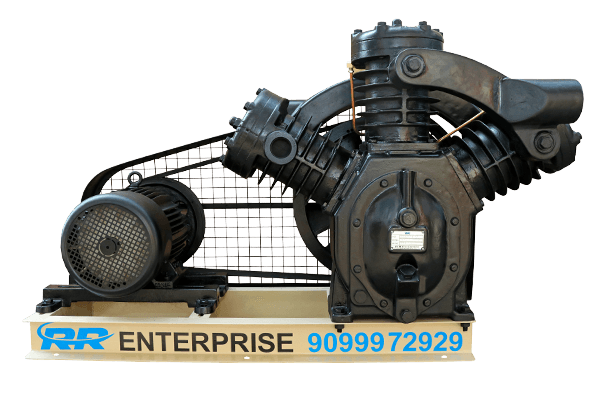
Reciprocating Air Compressor
For utility compressed air at water treatment plants – instrument air for control valve actuators in large water treatment plants, general maintenance air, pneumatic tools. Manufactured at R R Enterprise's Vapi GIDC facility. ISO 9001:2015 certified.
View DetailsETP and Wastewater Treatment Applications for Roots Blowers
Activated Sludge ETP Aeration
The most common and most critical ETP application. The Roots Blower forces air through fine bubble diffusers at the bottom of the aeration basin, creating millions of small air bubbles that transfer oxygen to the mixed liquor. The activated sludge bacteria consume this oxygen to break down BOD and COD. The blower must operate 24/7 at constant flow and pressure to maintain dissolved oxygen above 2 mg/L throughout the basin. Blower capacity is sized for the peak oxygen demand based on the effluent BOD and hydraulic flow rate.
Extended Aeration Systems
Extended aeration ETPs treat effluent with longer sludge retention time and lower food-to-microorganism (F/M) ratio, producing a more stable treated effluent and less excess sludge. These systems require the blower to supply oxygen for both BOD removal and nitrification (ammonia to nitrate conversion). The combined oxygen demand for BOD removal plus nitrification is significantly higher than for BOD removal alone. R R Enterprise sizes Roots Blowers for extended aeration systems based on the complete oxygen demand calculation.
SBR (Sequencing Batch Reactor) Aeration
Sequencing Batch Reactors are becoming popular for medium-sized ETPs because they combine aeration, settling and decanting in a single tank on a timed cycle. The Roots Blower in an SBR must operate intermittently — on during the aeration phase, off during the settle and decant phases. The blower must have reliable start-stop capability without seal damage. R R Enterprise manufactures Roots Blowers with specifications suitable for intermittent-duty SBR aeration applications.
CETP Aeration – Vapi GIDC
The VDPL CETP in Vapi GIDC receives and treats effluent from hundreds of factories in the industrial estate. The CETP's biological aeration system uses large Roots Blowers for the activated sludge basin. R R Enterprise supplies and services Roots Blowers for CETP-scale aeration applications, with capacity and reliability specifications appropriate for the large effluent volumes and mixed industrial effluent characteristics of a CETP.
Sludge Digestion Aeration
Aerobic sludge digestion (thickening and stabilisation of ETP excess sludge) uses Roots Blowers to aerate the sludge digestion tank. This reduces sludge volume and stabilises the sludge for disposal or land application. Aerobic digestion blowers operate at similar pressure to aeration basin blowers but may have different airflow requirements depending on the sludge concentration and tank geometry.
ETP Instrument Air – Control System
Large water treatment plants and ETPs with automated control systems use pneumatic actuators for dosing pump control, effluent flow modulation, sludge transfer valves and online analyzer sample conditioning. Instrument air for ETP control systems must be clean and dry — moisture in actuator supply lines causes corrosion and sticky valve action in the humid water treatment plant environment. A compact screw compressor with refrigeration dryer provides reliable instrument air for ETP automation.
Why Factory ETP Operators in Vapi GIDC Choose R R Enterprise for Their Roots Blowers
R R Enterprise is the only Twin Lobe Roots Blower manufacturer in the Vapi-Silvassa belt. This means the fastest delivery of new blowers, same-day availability of spare parts (bearings, seals, gear oil), and on-site repair service within 1–2 hours of a failure call for Vapi factory ETPs.
When an ETP aeration blower fails, the factory has 2–4 hours before dissolved oxygen depletion begins to damage the biological culture. R R Enterprise provides emergency response within 1–2 hours for Vapi GIDC locations. Emergency replacement units are maintained at our GIDC Vapi workshop.
Free ETP blower load assessment for factories whose production has grown since ETP commissioning. We calculate the current BOD/COD load, compare it to the existing blower's oxygen delivery capacity, and determine whether the blower is still correctly sized for GPCB consent compliance.
R R Enterprise supplies ETP aeration Roots Blowers pan India from our ISO 9001:2015 certified Vapi GIDC facility. We have supplied ETP blowers to chemical plants, agrochemical facilities, food processing units, paper mills and municipal water treatment plants across Gujarat, Maharashtra and other states.
R R Enterprise does not apply generic ETP sizing. We size the aeration blower based on the actual BOD/COD load of your specific industry effluent — chemical plant effluent (200–500 mg/L), paper mill effluent (500–2,000 mg/L), or agrochemical effluent (5,000–50,000 mg/L). Each needs a different blower capacity.
ISO 9001:2015 certified Roots Blower manufacturer. MSME Udyam registered. GIDC Vapi since 2017. Our quality processes ensure dimensional accuracy of lobe clearances — critical for blower efficiency and reliability in 24/7 continuous ETP aeration duty.
Frequently Asked Questions — ETP Aeration Roots Blower in Vapi
Questions from ETP managers, environmental officers and plant maintenance heads at factories in Vapi GIDC and across Gujarat.
Signs of an undersized ETP aeration blower include: dissolved oxygen in the aeration basin consistently below 2 mg/L despite the blower running at full capacity; sludge with poor settling characteristics (bulking); treated effluent BOD or COD testing above your GPCB consent values; and sludge with a dark colour and unpleasant odour indicating oxygen stress. If your factory’s production has increased since the ETP was commissioned, your blower may be undersized for the current load. R R Enterprise provides free ETP blower load assessments. Call +91 90999 72929.

Mission
We have a corporate philosophy of delivering high-quality products by implementing the latest technology resulting in unmatched quality standards at competitive prices. The company today is a leading name in the category of rotary screw air compressor, vacuum pump, twin lobe roots blower and vacuum booster particularly.

Vision
We are an Indian manufacturing company that has been producing compressors since 2017. Over the years, At the center of our company is a commitment to putting the customers needs first.

Our Success
We have achieved success today by implementing the latest technology in our design and production. We have left no leaf unturned in offering high-quality, durable and cost-effective products over the years and won the trust and satisfaction from all our clients spread nationally and across the globe.