
Air Compressor for
Paper & Pulp Industry
in Gujarat — Instrument Air | ETP Blower
Continuous instrument air systems for paper machine controls and Roots Blowers for high-BOD paper mill ETP aeration. R R Enterprise — ISO 9001:2015 certified · MSME registered · Authorised CP Dealer · Only local Roots Blower manufacturer in Vapi–Silvassa belt.
Paper & Pulp
Tier 2 — High PriorityWhy Paper Mills Need Specialised Compressed Air — Continuous, Dry and Reliable
Gujarat has a significant paper and paperboard manufacturing industry, with paper mills, corrugated board plants and specialty paper manufacturers spread across Vapi, Surat and other industrial centres. Paper mills produce writing and printing paper, packaging board, tissue paper, newsprint and kraft paper. Corrugated box manufacturers in Vapi GIDC consume large quantities of kraft and test liner board for carton production.
Compressed air in a paper mill is different from any other industry because the paper machine runs a continuous web at speeds of 200–1,200 metres per minute, and every section of the machine is controlled by pneumatic actuators that depend on instrument air. The headbox slice lip that controls paper basis weight, the press roll loading cylinders, the dryer section steam pressure controllers and the reel spool change actuators all operate on instrument air. Any interruption to the instrument air supply — even for 30 seconds — causes pneumatic control valves to lose position and the paper web to break.
Beyond the machine itself, paper mills generate effluent with extremely high Biological Oxygen Demand (BOD) from dissolved cellulose fibres, starch, coating chemicals and process water. The ETP aeration system for a paper mill must be sized for significantly higher oxygen demand than ETPs for chemical or food plants of equivalent volume. R R Enterprise manufactures Roots Blowers for paper mill ETP aeration at our Vapi GIDC facility.
3 Compressed Air Problems That Are Specific to Paper and Pulp Manufacturing
These problems are unique to paper and pulp manufacturing. They do not exist in the same form for textile mills, chemical plants or food factories.
Paper Machine Instrument Air Failure for 30 Seconds Breaks the Paper Web and Stops the Machine
A paper machine is not like an injection moulding machine or a filling line that can pause and restart. The paper machine runs a continuous moving web of paper – at speeds between 200 and 1,200 metres per minute depending on the grade and machine type. Every control point on the machine – the headbox slice lip controlling basis weight, the suction press roll loading, the dryer section air supply, and the reel spool change actuators – is controlled by pneumatic actuators operating on instrument air at 5–7 bar. When instrument air pressure drops below the minimum operating pressure of these actuators, they lose position simultaneously. The headbox slice opens or closes unpredictably, the web basis weight goes off-specification, the press roll loading drops, and within seconds the wet paper web, which has very low strength, breaks. A web break on a paper machine running at 800 m/min means: threading the broke through the entire machine takes 20–60 minutes, all paper produced in the minutes before and after the break must be rejected, and the broken sheet material (broke) must be returned to the pulp chest and repulped. On a machine producing 200 tonnes of paper per day, one hour of web break downtime costs 8–10 tonnes of lost production. The compressed air system supplying paper machine instrument air must have a receiver tank sized for minimum 15–30 minutes of full demand at operating pressure – so that even if the compressor fails, the instrument air supply continues long enough for a controlled machine slowdown and safe stop.
Moisture in Instrument Air Accelerates Corrosion in the Paper Machine Wet End – an Already Humid Environment
The wet end of a paper machine – the section from the headbox to the couch roll – is an extremely humid environment. Steam, hot water spray showers, the forming fabric and wire carry and release large quantities of water continuously. The relative humidity at the wet end is effectively 100%. When the instrument air supply to wet end actuators and valve positioners contains moisture, the moisture enters an environment that is already saturated with steam and water. The consequences are accelerated corrosion of actuator internal components (stainless steel and brass fittings corrode faster in the wet end steam environment), control valve positioners that develop sticking and hunting behaviour as corrosion roughens the internal spool and bore, and differential pressure transmitters on the headbox and press section that give erratic readings when condensate forms in the instrument air impulse lines. A refrigeration air dryer is essential for paper machine instrument air. For critical control loops on high-speed machines, a desiccant air dryer providing a pressure dewpoint of -40°C is recommended to ensure no condensation even in the hot, humid wet end environment.
Paper Mill ETP Has the Highest BOD of Any Local Industry – Blower Failure Is More Urgent Than for Other Plants
Paper mill effluent contains dissolved cellulose fibres, lignin compounds, starch (used in paper sizing and coating), paper coating pigments and process chemicals. This combination gives paper mill effluent a Biological Oxygen Demand (BOD) of 500–2,000 mg/L – three to ten times higher than the effluent from a typical chemical plant or food factory. The biological treatment stage of the ETP must supply oxygen at a proportionally higher rate to sustain the activated sludge bacteria that break down this high-BOD load. This means the Roots Blower for ETP aeration at a paper mill must be sized for much higher airflow than a blower of the same rating installed at a chemical or food plant ETP. It also means that if the ETP aeration blower fails at a paper mill, the biological treatment process begins to fail much faster – because the high BOD quickly depletes all dissolved oxygen in the aeration basin, and the bacteria begin to die within hours. Restoring biological treatment after a complete die-off can take weeks and requires re-seeding of activated sludge. R R Enterprise is the only local Roots Blower manufacturer in the Vapi-Silvassa belt and provides emergency replacement and on-site repair for paper mill ETP blowers.
How R R Enterprise Solves Each of These Problems
R R Enterprise engineers size the compressor and receiver tank for your paper machine instrument air demand. The receiver must provide a minimum of 15–30 minutes of air at full demand pressure so that a controlled machine slowdown and safe stop is possible even if the compressor fails during production. 24/7 emergency response from our Vapi GIDC base minimises repair time.
A refrigeration air dryer providing a pressure dewpoint of +3°C is the minimum for paper machine instrument air. For critical control loops in the wet end of high-speed machines, a desiccant dryer providing -40°C dewpoint ensures no condensation in the hot, steam-laden wet end environment. R R Enterprise supplies and maintains both dryer types.
R R Enterprise engineers size the Roots Blower for paper mill ETP aeration based on the actual BOD load — not generic sizing for a standard industrial ETP. We are the only local Roots Blower manufacturer in the Vapi-Silvassa belt. Emergency replacement and on-site repair for paper mill ETP blowers from our GIDC Vapi facility.
Products We Supply to Paper Mills and Board Manufacturers in Gujarat

Chicago Pneumatic (Authorised CP Dealer)
Authorised CP Dealer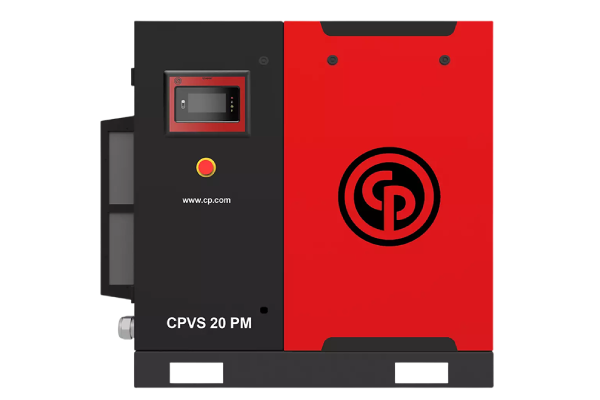
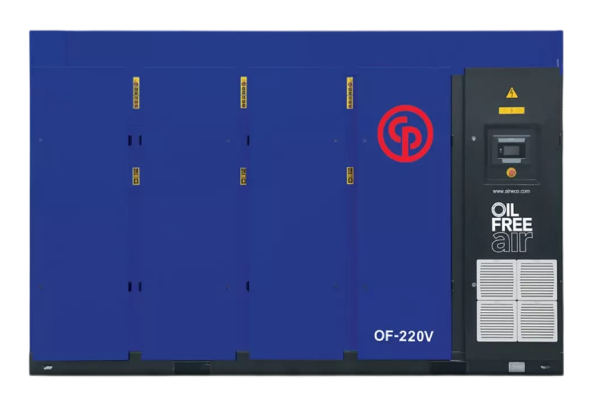
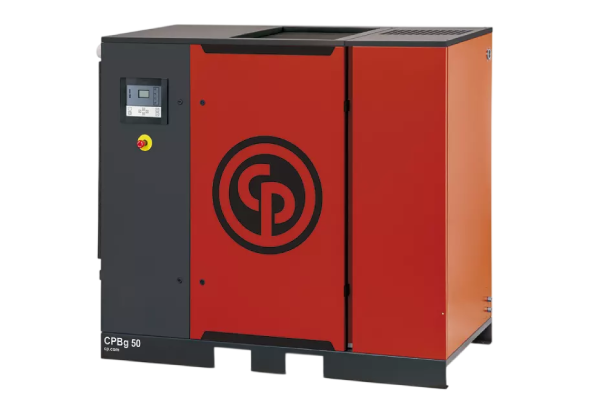
Fixed Speed Screw Compressor
For paper machine instrument air where demand is relatively constant during a production run. The paper machine runs continuously and the instrument air demand remains at a near-constant level. A fixed speed screw compressor with large receiver tank is the standard instrument air solution for smaller paper machines and corrugated board lines.
View Details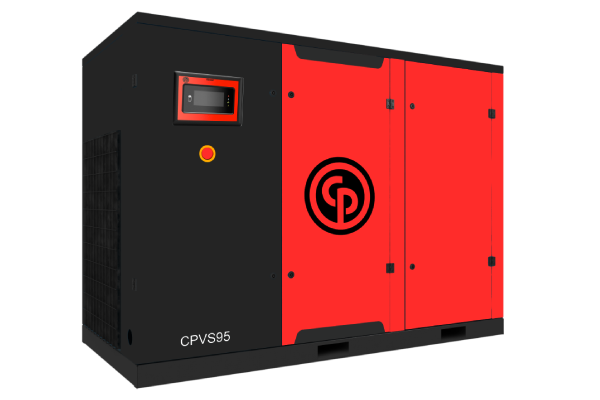
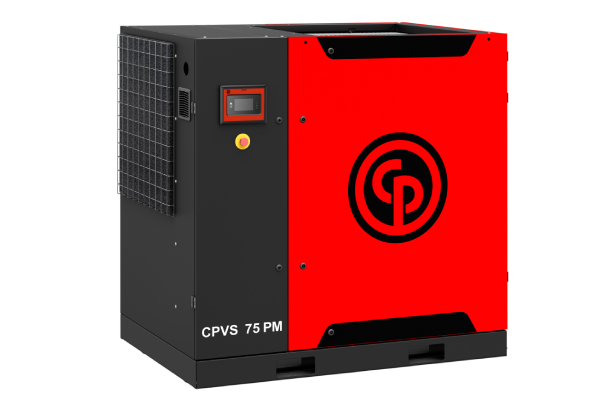
VFD Variable Speed Screw Compressor
For larger paper mills where multiple compressed air users (instrument air, utility air, cleaning) share the same compressor supply. VFD matches motor speed to the total varying demand, maintaining stable pressure for instrument air while saving 20–35% electricity on the combined load. Also recommended for mills with significant demand variation between machine-running and machine-stopped conditions.
View Details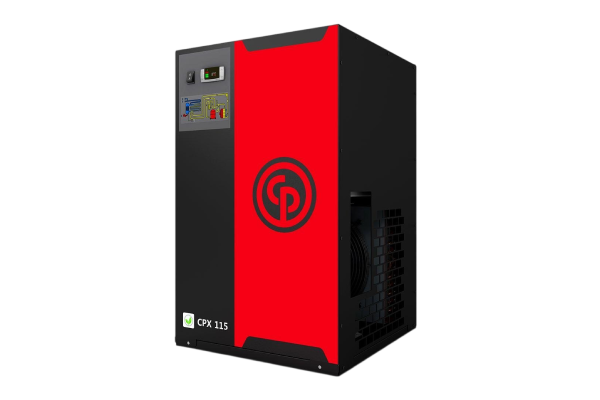
Refrigeration Air Dryer
Essential for paper machine instrument air. Removes moisture before it reaches wet end actuators and valve positioners. Prevents accelerated corrosion in the steam and water environment of the wet end. Provides a stable pressure dewpoint of +3°C, preventing condensate formation in instrument air headers.
View Details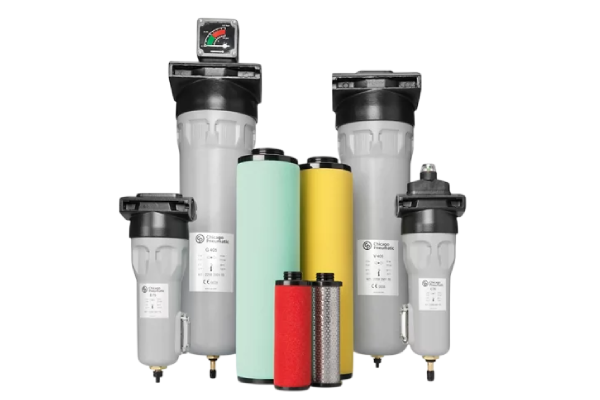
Air Treatment – Filtration
Coalescing filtration removes bulk moisture and oil aerosols before the dryer. Post-dryer particulate filtration ensures clean, dry instrument air reaching sensitive valve positioners and pressure transmitters on the paper machine. Recommended for all paper machine instrument air supply.
View Details
R R Enterprise Manufactured Products
Manufactured Products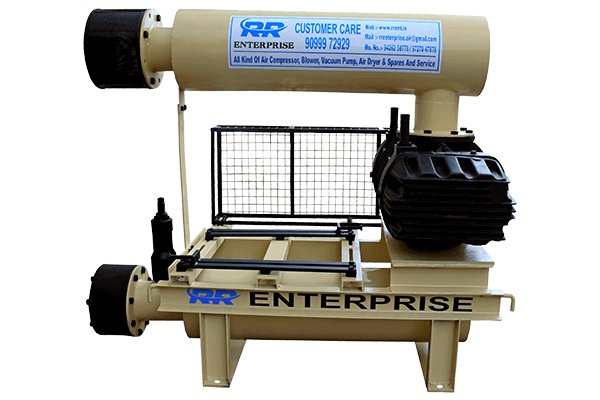
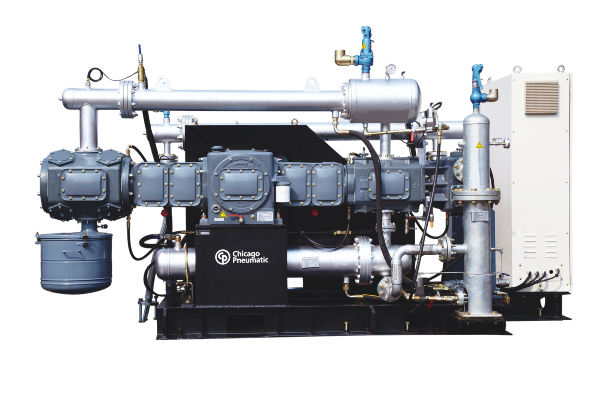
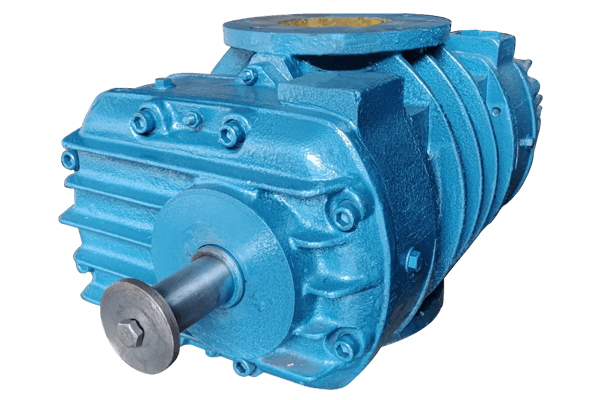
Twin Lobe Roots Blower – ETP Aeration
For paper mill ETP aeration. Paper mill effluent has BOD of 500–2,000 mg/L – 3–10× higher than most other industries. The ETP aeration Roots Blower must be sized for this high oxygen demand. R R Enterprise manufactures ETP aeration Roots Blowers and is the only local manufacturer in the Vapi-Silvassa belt. Emergency replacement and on-site repair available.
View Details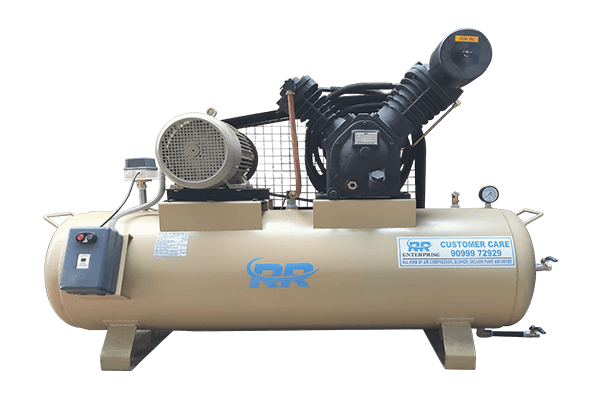
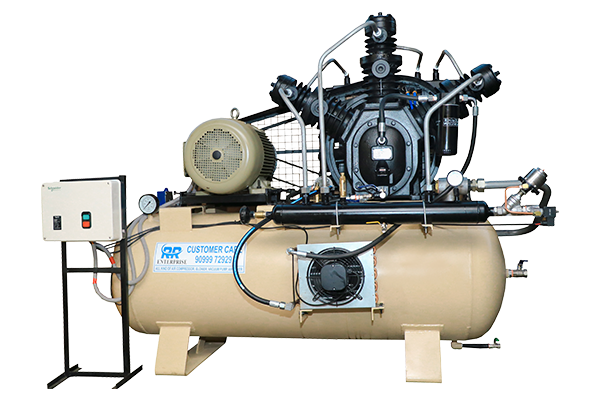
Reciprocating Air Compressor
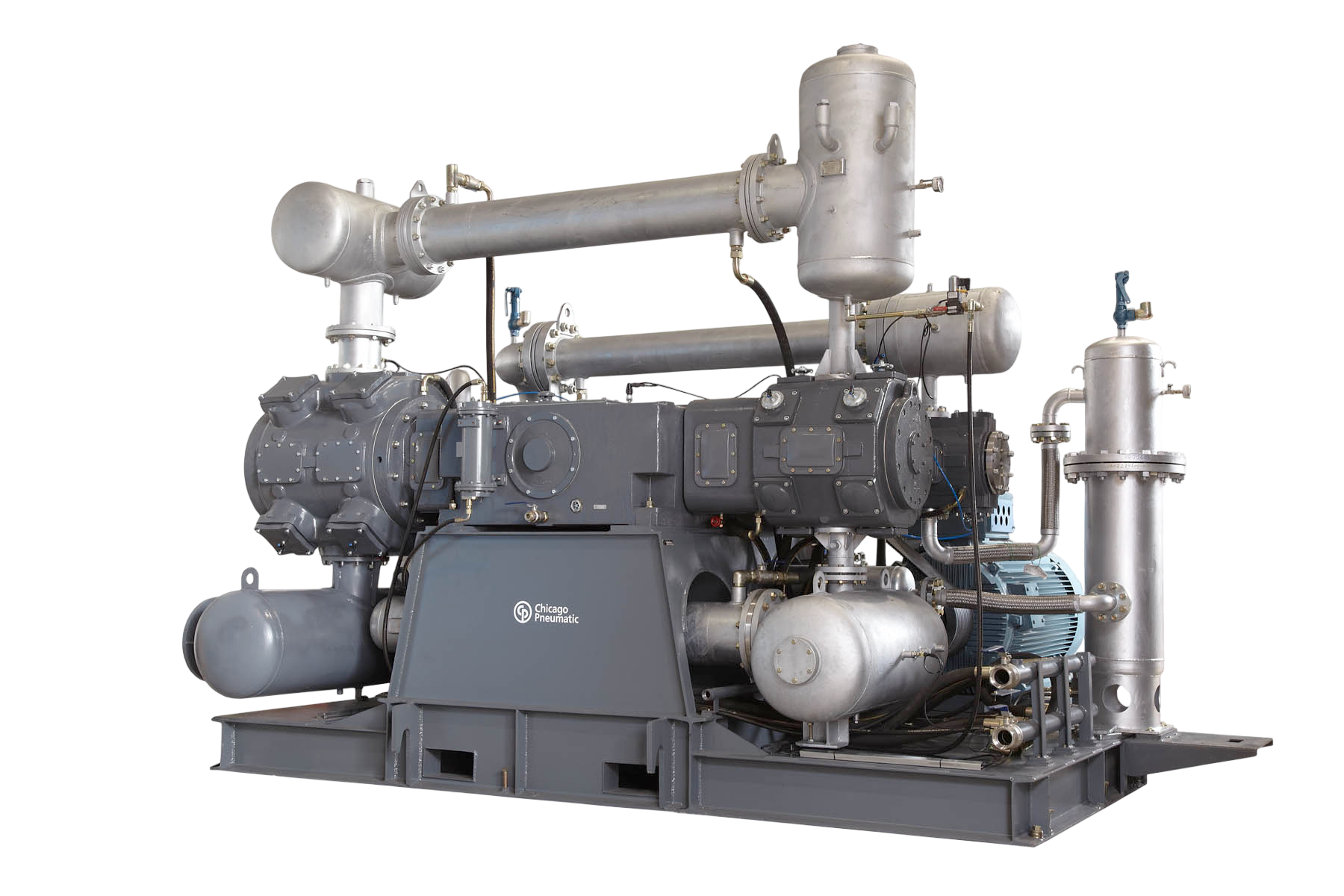
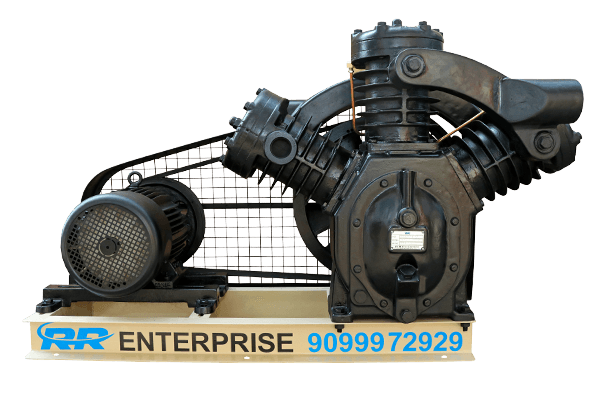
For utility compressed air at paper mills – reel handling, roll wrapping, general cleaning, maintenance air supply. Not for instrument air. Manufactured at R R Enterprise's Vapi GIDC facility. ISO 9001:2015 certified. MSME registered.
View DetailsHow Compressed Air Is Used in Paper and Pulp Manufacturing
Paper Machine Instrument Air
The most critical compressed air application in a paper mill. Instrument air at 5–7 bar controls headbox slice lip (basis weight), suction press roll loading (dewatering efficiency), dryer pressure controllers (moisture profile), and reel spool change actuators. Receiver tank must provide 15–30 minutes of full-demand air to allow controlled machine slowdown if the compressor fails. Dry, clean instrument air is mandatory – the wet end environment already provides maximum humidity stress on the instrument air system.
Wet End Drainage and Formation Controls
Foil blades, uhle boxes and suction rolls in the wet end use pneumatic pressure to control water removal from the forming paper web. The loading pressure on forming elements is controlled by pneumatic regulators that adjust in real time based on sheet moisture profile feedback. Any pressure instability in the instrument air supply causes variation in forming element loading, resulting in variation in the moisture profile and basis weight of the paper sheet – a direct paper quality defect that affects runnability in printing and converting operations downstream.
Press and Dryer Section Controls
The press section uses pneumatic cylinders to apply controlled nip pressure between press rolls for water removal. The dryer section uses compressed air for steam control valve actuators that regulate dryer can temperatures and moisture profiles. These are continuous-duty, precise pneumatic applications where pressure stability determines paper quality. The instrument air to the dryer section must be extremely dry – the steam environment and high temperatures in the dryer section make any condensation in instrument air lines a reliability problem.
Winder and Reel Handling
The winder section of the paper machine uses compressed air for reel stand brake actuators (controlling tension of the unwinding parent reel), rider roll loading (controlling winding hardness of the finished reel), and turret positioning for automatic reel change. These are cyclic, higher-flow compressed air applications that place a burst demand on the air supply at each reel change event. The receiver tank must be sized to handle these peak demands without affecting the continuous instrument air supply to the machine controls.
ETP Aeration – High BOD Paper Mill Effluent
Paper mill process water contains dissolved cellulose, starch, lignin, coating pigments and process chemicals. This gives paper mill effluent a BOD of 500–2,000 mg/L – 3–10 times higher than a typical chemical plant. The ETP aeration Roots Blower must supply oxygen at a proportionally higher rate to sustain the activated sludge. R R Enterprise sizes and manufactures Roots Blowers for paper mill ETP aeration based on actual BOD load from the mill. Emergency replacement from our Vapi GIDC facility if the blower fails.
Pulp and Stock Preparation
The stock preparation section of a paper mill uses compressed air for diaphragm pump actuation in chemical dosing systems (for sizing agents, retention aids, wet strength resins), for operating the consistency control valves on the approach flow system, and for pneumatic agitators in chemical mixing tanks. These are moderate-duty instrument air applications that share the main instrument air header. Cleanliness and pressure stability requirements are the same as the paper machine instrument air.
Why Paper Mills and Board Manufacturers in Gujarat Choose R R Enterprise
R R Enterprise engineers size the receiver tank to provide 15–30 minutes of instrument air at full demand, allowing a controlled machine slowdown and safe stop if the compressor fails during production. This is a paper industry-specific sizing requirement that most general compressor suppliers do not address.
We specify the correct dryer for paper machine instrument air – refrigeration dryer for most machines, desiccant dryer for critical loops in high-speed wet end applications. R R Enterprise understands that the already-humid wet end environment makes instrument air dryness a continuous reliability requirement, not a theoretical specification.
R R Enterprise sizes ETP aeration Roots Blowers based on the actual BOD load of paper mill effluent – not generic industrial ETP sizing. As the only local Roots Blower manufacturer in Vapi-Silvassa, we provide emergency replacement for paper mill ETP blowers faster than any other supplier.
R R Enterprise is Authorised Chicago Pneumatic Compressors Dealer in South Gujarat. Genuine CP parts for screw compressors stocked at our Vapi GIDC workshop for same-day supply. CP Secure warranty activation on all CP compressor installations. Factory-trained CP engineers for service and commissioning.
Paper machines run continuously. A compressor failure during production creates an immediate instrument air depletion risk. R R Enterprise provides 24/7 emergency compressed air system repair and ETP blower repair for paper mills in Gujarat. Engineers permanently stationed at Vapi GIDC – 2–4 hour response time.
ISO 9001:2015 certified manufacturer and Authorised CP Dealer. MSME Udyam registered. Operating from GIDC Vapi since 2017. Pan India supply for Roots Blowers and reciprocating compressors from our certified manufacturing facility.
Frequently Asked Questions — Air Compressor for Paper & Pulp Industry
Questions from paper mill maintenance managers, utility engineers and ETP supervisors across Gujarat.
Paper machine instrument air requires a compressor with a receiver tank sized for 15–30 minutes of full-demand air at operating pressure. A CP Fixed Speed Screw Compressor (for relatively constant demand during machine running) or CP VFD Screw Compressor (where demand varies between running and stopped conditions) with a refrigeration air dryer and filtration system is the standard solution. The receiver tank sizing is the most critical specification for paper machine instrument air — it determines how long the machine can continue running after a compressor failure. R R Enterprise provides receiver sizing calculations. Call +91 90999 72929.
Is a desiccant dryer needed for paper machine instrument air or is a refrigeration dryer sufficient?

Mission
We have a corporate philosophy of delivering high-quality products by implementing the latest technology resulting in unmatched quality standards at competitive prices. The company today is a leading name in the category of rotary screw air compressor, vacuum pump, twin lobe roots blower and vacuum booster particularly.

Vision
We are an Indian manufacturing company that has been producing compressors since 2017. Over the years, At the center of our company is a commitment to putting the customers needs first.

Our Success
We have achieved success today by implementing the latest technology in our design and production. We have left no leaf unturned in offering high-quality, durable and cost-effective products over the years and won the trust and satisfaction from all our clients spread nationally and across the globe.