
Air Compressor for
Agrochemical Industry
in Vapi GIDC — Reactor | ETP | Solvent-Safe
VFD screw compressors for instrument air in agrochemical reactors, Roots Blowers for high-COD ETP aeration, and solvent-safe compressor placement for agrochemical plants in Vapi GIDC. R R Enterprise — ISO 9001:2015 · MSME · Authorised CP Dealer · Only Local Roots Blower Manufacturer.
Agrochemical
Tier 2 — High PriorityWhy Agrochemical Plants in Vapi Need a Different Approach to Compressed Air
Vapi GIDC is one of India’s most important agrochemical manufacturing clusters. The cluster includes manufacturers of insecticides, herbicides, fungicides, plant growth regulators and bio-pesticides, as well as formulation units producing emulsifiable concentrates (EC), wettable powders (WP), water dispersible granules (WDG) and suspension concentrates (SC). Both multi-national agrochemical companies and domestic manufacturers operate in the Vapi GIDC and Silvassa region.
Compressed air in an agrochemical plant faces challenges that are different from both a standard chemical plant and a pharmaceutical plant. The key differences are: the active ingredients being processed are toxic by design (they are made to kill insects, weeds or fungi), the solvents used in formulation include flammable compounds (toluene, xylene, methanol), and the effluent treatment system must handle one of the highest chemical oxygen demands (COD) of any local industry. Each of these creates specific requirements for the compressed air and vacuum systems that serve the plant.
R R Enterprise serves agrochemical manufacturers in Vapi GIDC as Authorised Chicago Pneumatic Compressors Dealer and as the only local Roots Blower manufacturer in the Vapi–Silvassa belt. We supply and service both the instrument air compressors for reactor control systems and the ETP aeration Roots Blowers for agrochemical effluent treatment.
3 Compressed Air Problems Specific to Agrochemical Manufacturing in Vapi
These problems are unique to agrochemical manufacturing. They combine elements from chemical, pharmaceutical and environmental contexts in a way that is specific to agrochemical plants.
Instrument Air Failure During Continuous Reactor Synthesis Is a Safety Event, Not Just a Production Stoppage
Many agrochemical active ingredients are synthesised in continuous or semi-continuous reactors under precise temperature, pressure and reactant feed rate control. The reactor control systems use pneumatic valves for reactant addition, pressure relief, temperature control and emergency shutdown. In a continuous agrochemical reactor, loss of instrument air is not just a production stoppage — it is a potential safety event. When instrument air fails, pneumatic control valves lose position. In a reactor where an exothermic reaction is in progress — many agrochemical synthesis reactions involve hazardous exothermic steps — loss of the temperature control valve, cooling water flow control or reactant feed shut-off creates conditions that require immediate manual intervention by trained operators in full PPE. The emergency manual shutdown procedure for a continuous agrochemical reactor is a significant safety operation, quite different from simply stopping a textile loom or a packaging line. The instrument air supply for agrochemical reactors must have a receiver tank sized for 15–30 minutes of demand at operating pressure, and 24/7 emergency response from a locally-based compressor service team.
Solvent Vapours in the Plant Environment Enter the Compressor and Destroy Oil and Seals Prematurely
Agrochemical formulation facilities operate with solvents including toluene, xylene, methanol, isopropanol and acetone at varying concentrations depending on the formulation type and the ventilation of the work area. These solvent vapours, if present in the ambient air around the compressor, are drawn into the compressor inlet with the inlet air. Solvent vapours contaminate compressor oil in oil-lubricated screw compressors. Even at low concentrations, solvent contamination breaks down the additive package in the compressor oil, dramatically reducing oil life and increasing the risk of deposit formation in the oil separator element and oil cooler. Solvent-contaminated compressed air in the downstream piping and receiver tank can accumulate at concentrations that create a fire hazard when the air is subsequently used near ignition sources in the formulation area. Solvents also attack nitrile and neoprene rubber O-rings and hose fittings in the compressed air distribution system, causing premature failure and air leaks. Agrochemical plants in Vapi must place compressors in well-ventilated locations, away from formulation areas, with inlet air drawn from a clean source if possible.
Agrochemical ETP Has Extremely High COD — The ETP Blower Is Critical for GPCB Environmental Clearance
Agrochemical manufacturing effluent contains pesticide synthesis by-products, solvents, reaction intermediates and washing solutions that give the effluent an extremely high Chemical Oxygen Demand (COD) — often 5,000–50,000 mg/L or higher in concentrated process streams before dilution with general plant effluent. The biological treatment stage of an agrochemical plant ETP must supply oxygen at a rate sufficient to sustain the activated sludge bacteria that break down this high-COD effluent. The Roots Blower for agrochemical plant ETP aeration must be sized significantly larger than blowers for chemical or food plant ETPs of similar volume. GPCB (Gujarat Pollution Control Board) holds agrochemical plants to strict effluent quality standards — a failed ETP can result in GPCB action including show-cause notice and plant closure. R R Enterprise is the only local Roots Blower manufacturer in the Vapi–Silvassa belt and provides emergency replacement for agrochemical ETP blowers.
How R R Enterprise Solves Each of These Problems
R R Enterprise engineers size the compressor and receiver tank for agrochemical reactor instrument air — including the 15–30 minute buffer for controlled reactor shutdown if the compressor fails. 24/7 emergency response from our Vapi GIDC base means 2–4 hour response to agrochemical plants on any shift..
R R Enterprise engineers advise on compressor placement for agrochemical plants: inlet air drawn from a clean, ventilated area away from the formulation building; solvent-resistant seals specified; ROTAIR Xtra synthetic oil recommended (better oxidation resistance than mineral oil when exposed to solvent contamination). Written service intervals to change oil before contamination becomes critical..
R R Enterprise sizes ETP aeration Roots Blowers for agrochemical plant effluent based on actual COD and effluent volume — not generic ETP sizing. As the only local Roots Blower manufacturer in Vapi–Silvassa, we provide emergency replacement for agrochemical ETP blowers faster than any other supplier. .
Products We Supply to Agrochemical Plants in Vapi GIDC

Chicago Pneumatic (Authorised CP Dealer)
Authorised CP Dealer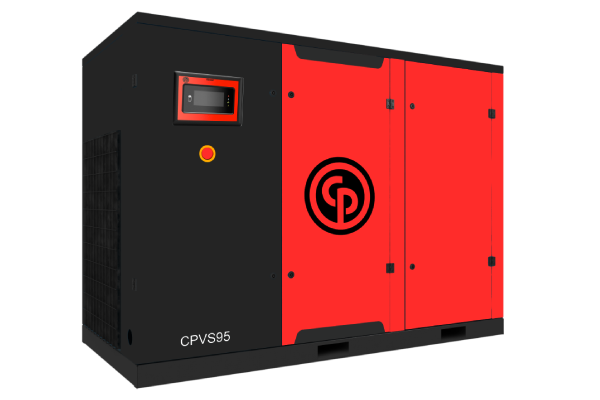
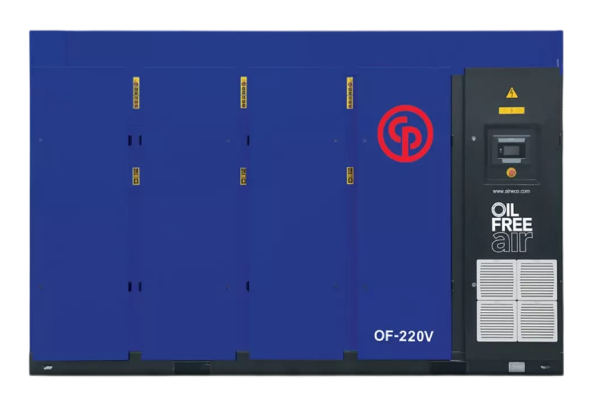
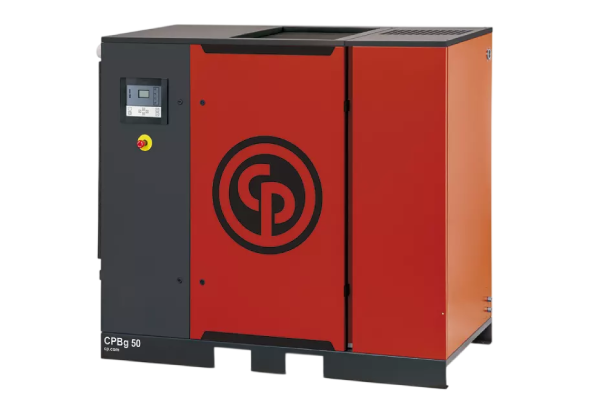
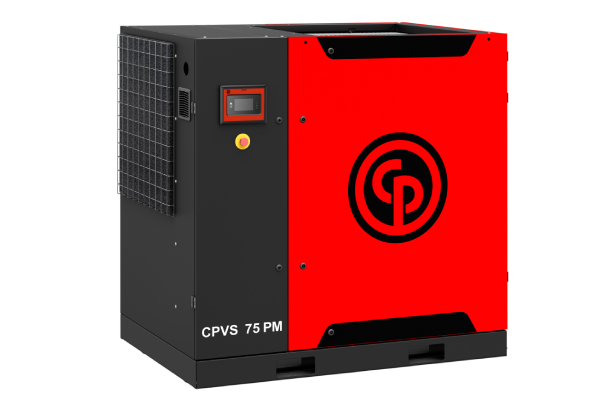
VFD Variable Speed Screw Compressor
For instrument air in agrochemical reactor control systems. VFD maintains stable pressure for reliable pneumatic control valve operation. Saves 20–35% electricity as plant demand varies across production shifts. Recommended for agrochemical plants with multiple instrument air users across reactor, formulation and utilities sections.
View Details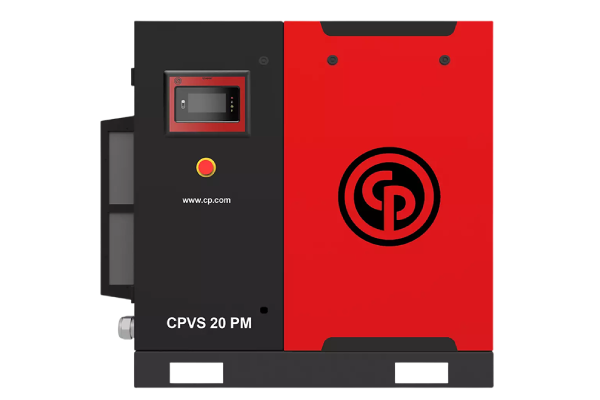
Fixed Speed Screw Compressor
For smaller agrochemical plants and formulation units with steady instrument air demand. Lower capital cost than VFD where demand is genuinely constant during production runs. Must be placed in a well-ventilated location with inlet air drawn from away from solvent formulation areas.
View Details
Refrigeration Air Dryer
Essential for agrochemical reactor instrument air. Dry instrument air prevents condensate formation in pneumatic control valve air supply lines. In an agrochemical plant where the process contains toxic materials, condensate that forms in instrument air headers can contain traces of process material and must not be discharged as untreated drain water.
View Details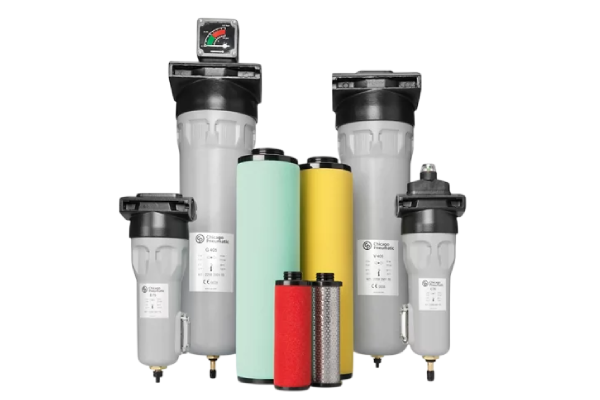
Air Treatment — Filtration
Coalescing and particulate filtration for instrument air quality. In agrochemical plants where process materials can contaminate the compressed air system, clean instrument air reduces the risk of process contamination being carried into downstream equipment through the air supply.
View Details
R R Enterprise Manufactured Products
Manufactured Products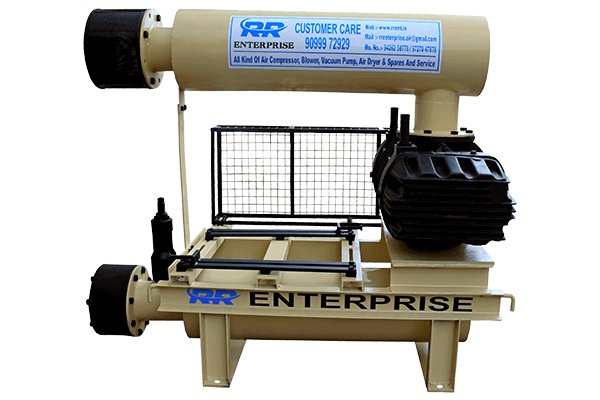
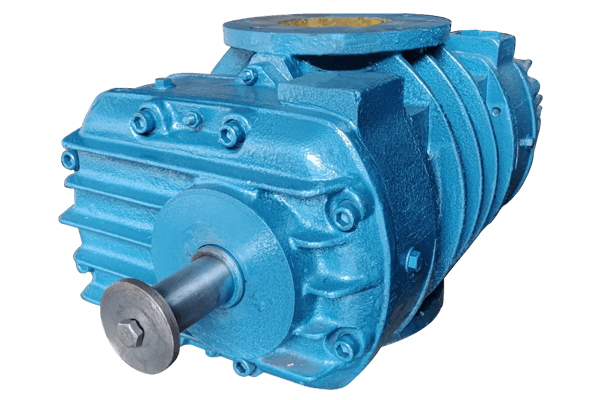
Twin Lobe Roots Blower — ETP Aeration
For agrochemical plant ETP aeration. Agrochemical effluent has very high COD (5,000–50,000 mg/L in concentrated streams before dilution). The ETP aeration Roots Blower must be sized for this high oxygen demand. R R Enterprise sizes and manufactures Roots Blowers for agrochemical ETP aeration at our Vapi GIDC facility. Only local manufacturer in Vapi–Silvassa belt.
View Details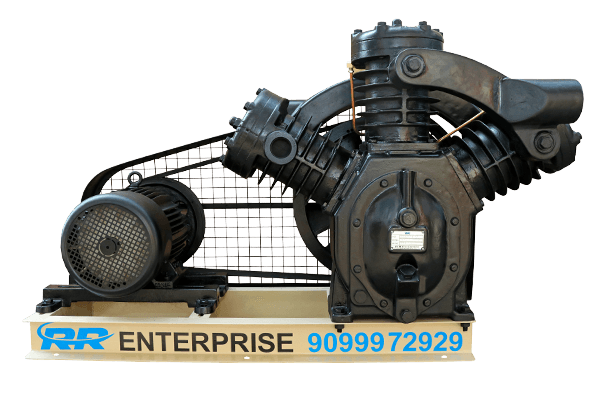
Reciprocating Dry Vacuum Pump
For reactor evacuation before inert gas blanketing in agrochemical synthesis. The dry vacuum pump has no oil in the vacuum chamber, preventing oil contamination of reactor systems during evacuation. Removing oxygen from the reactor before introducing reaction gas or solvent reduces fire and explosion risk in agrochemical synthesis steps.
View Details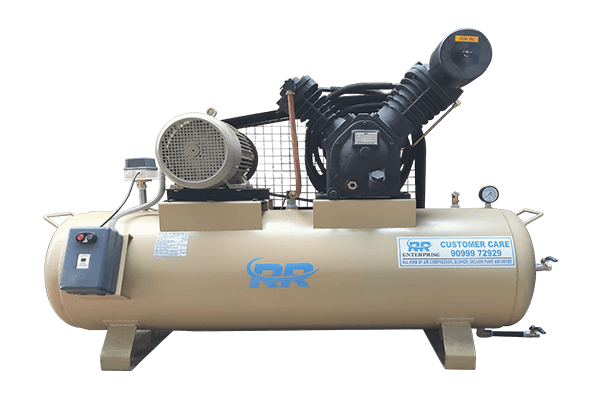
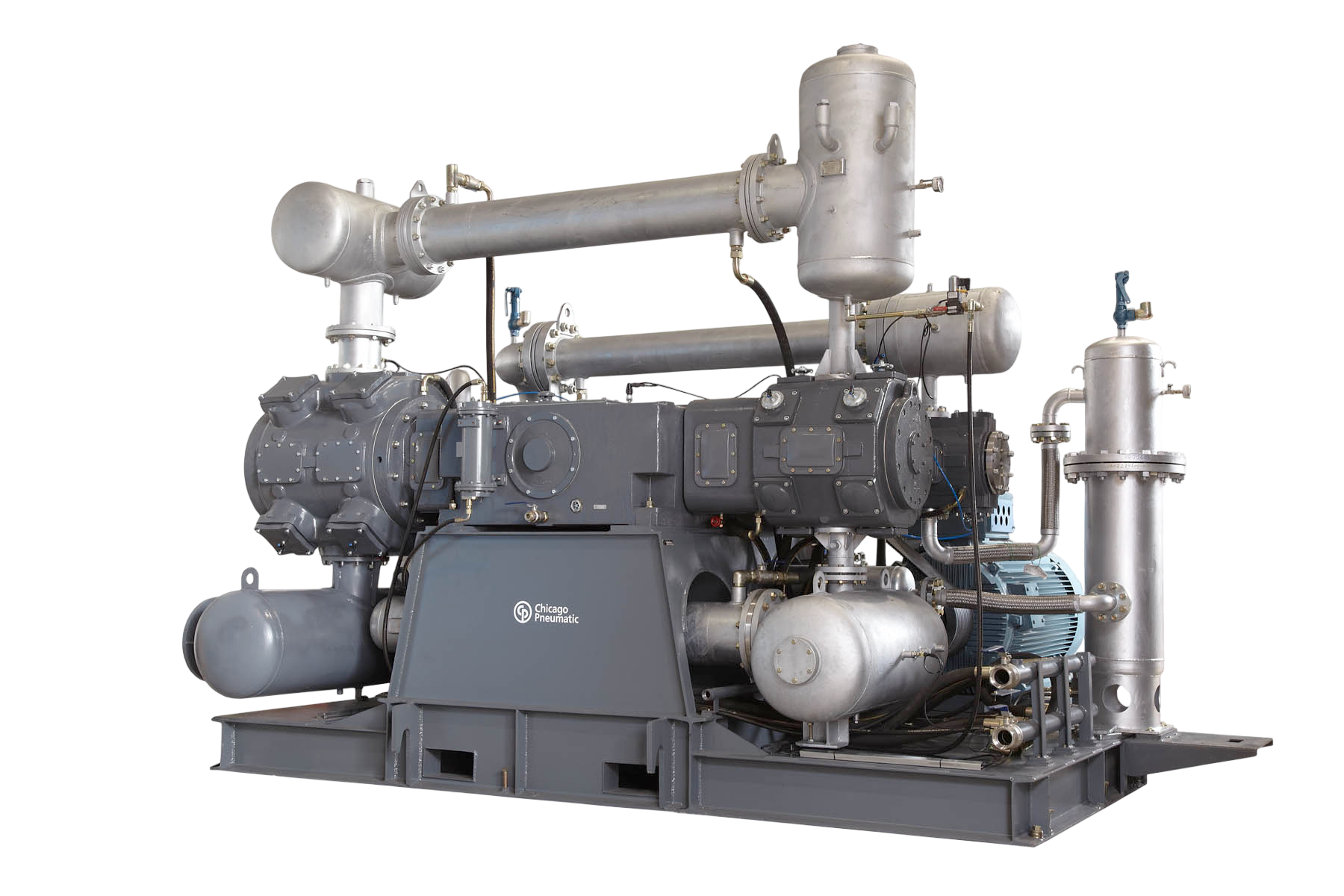
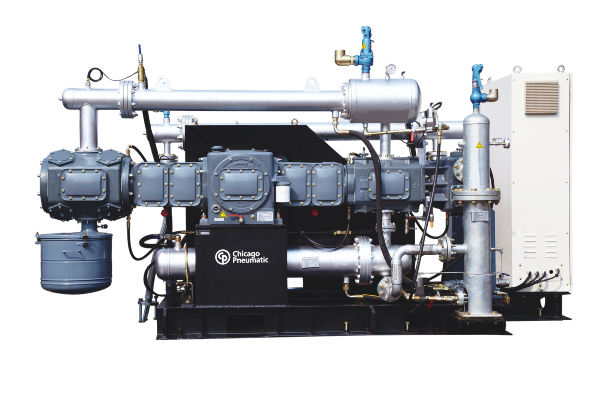
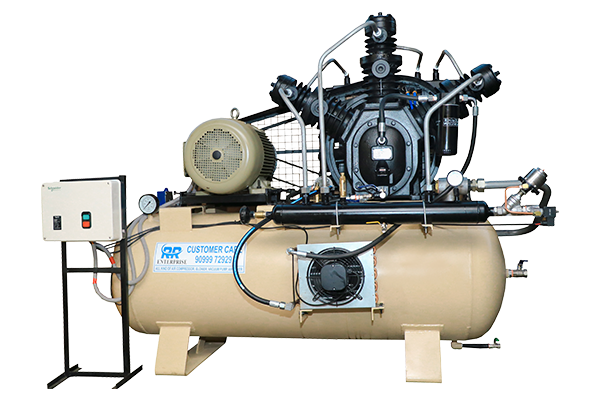
Reciprocating Air Compressor
For utility compressed air at agrochemical plants — general cleaning, pneumatic tools for maintenance, drum handling pneumatics. Not for instrument air or process air. Located well away from formulation areas to avoid solvent vapour ingestion. R R Enterprise manufactures at Vapi GIDC. ISO 9001:2015.
View DetailsHow Compressed Air Is Used in Agrochemical Manufacturing
Instrument Air — Reactor Control System
Pneumatic control valves for reactant addition, temperature control, pressure relief and emergency shutdown throughout the agrochemical synthesis plant. Instrument air at 5–7 bar must be continuous, clean and dry. Receiver tank must provide 15–30 minutes of full-demand air for controlled reactor shutdown if the compressor fails. Any interruption to instrument air in a continuous agrochemical reactor is a potential safety event requiring immediate manual response.
Pneumatic Conveying — Technical Grade Powder
Agrochemical technical grade active ingredient powders (fungicides, insecticides in powder form) are conveyed pnematically between process stages — from synthesis to drying to grinding to formulation. The compressed air or blower air carries toxic powder through the conveying pipes. Air conveying systems for agrochemical powders must be closed-loop or properly vented to scrubbers to prevent active ingredient emission to atmosphere. RR Roots Blowers for low-pressure powder conveying.
Spray Drying — Water Dispersible Granules
Water dispersible granule (WDG) formulations of agrochemical active ingredients are produced by spray drying an aqueous suspension of the active ingredient with carrier and dispersant additives. Compressed air atomises the feed slurry through the spray nozzle at the top of the spray dryer. The atomising air must be clean and dry — moisture in the atomising air affects droplet formation and the final granule particle size distribution, which determines how well the WDG disperses in water when diluted by the end user.
ETP / ZLD Aeration — Very High COD Effluent
Agrochemical manufacturing effluent contains synthesis by-products, solvents, reaction intermediates and formulation additives that give the effluent very high COD. The biological aeration stage must supply oxygen at a high rate to sustain the activated sludge bacteria. Many agrochemical plants in Vapi GIDC must also operate Zero Liquid Discharge (ZLD) systems — the ETP aeration is a critical step in the ZLD process chain. R R Enterprise manufactures ETP aeration Roots Blowers sized for agrochemical plant effluent COD loads.
Reactor Evacuation — Inert Gas Blanketing
Before introducing flammable solvents or reactive gases into agrochemical synthesis reactors, the reactor vessel is first evacuated to remove oxygen. This prevents fire and explosion hazard during the subsequent charging step. The dry vacuum pump used for reactor evacuation must be oil-free in the vacuum chamber to prevent oil contamination of the reactor and the reaction product. R R Enterprise manufactures Reciprocating Dry Vacuum Pumps at our Vapi GIDC facility for this application.
Filling and Packaging of Formulated Product
Agrochemical liquid formulations (EC, SC, SL concentrates) and dry formulations (WP, WDG) are filled into bottles, cans, sachets and drums using automated filling equipment. Compressed air operates the filling machine pneumatic actuators, container positioning and capping systems. This is a standard compressed air application at 6–8 bar, separate from the process instrument air system. A standard VFD screw compressor with refrigeration dryer for the packaging line utility air is the correct solution.
Why Agrochemical Manufacturers in Vapi GIDC Choose R R Enterprise
R R Enterprise engineers size the receiver tank for agrochemical reactor instrument air to provide 15–30 minutes of demand at operating pressure. This is the critical engineering specification for continuous agrochemical reactor safety — it determines whether a compressor failure triggers a controlled shutdown or a safety emergency.
R R Enterprise engineers advise on compressor siting and inlet air design for agrochemical plants with solvent vapour environments. Correct placement and ROTAIR Xtra synthetic oil selection reduces solvent-related compressor oil degradation and extends compressor service life in the demanding agrochemical plant environment.
Sizes ETP aeration Roots Blowers for actual agrochemical plant COD loads — not generic ETP sizing. Only local Roots Blower manufacturer in Vapi–Silvassa belt. Emergency replacement and on-site repair for agrochemical ETP blowers faster than any other supplier.
R R Enterprise manufactures Reciprocating Dry Vacuum Pumps for reactor evacuation before inert gas blanketing. Dry design means no oil in the vacuum chamber — preventing oil contamination of agrochemical synthesis equipment during the pre-charge evacuation step.
Instrument air failure in a continuous agrochemical reactor is a potential safety event. R R Enterprise provides 24/7 emergency compressed air system repair for agrochemical plants in Vapi GIDC and Silvassa. Engineers permanently stationed at Vapi GIDC. 2–4 hour response on any shift.
ISO 9001:2015 certified manufacturer and Authorised CP Dealer. MSME Udyam registered. Serving chemical and agrochemical plants in Vapi GIDC since 2017. Agrochemical plant vendor qualification procedures typically require quality certification from service providers.
Frequently Asked Questions — Air Compressor for Agrochemical Industry in Vapi
Questions from plant managers, maintenance engineers and ETP supervisors at agrochemical plants in Vapi GIDC and Silvassa.

Mission
We have a corporate philosophy of delivering high-quality products by implementing the latest technology resulting in unmatched quality standards at competitive prices. The company today is a leading name in the category of rotary screw air compressor, vacuum pump, twin lobe roots blower and vacuum booster particularly.

Vision
We are an Indian manufacturing company that has been producing compressors since 2017. Over the years, At the center of our company is a commitment to putting the customers needs first.

Our Success
We have achieved success today by implementing the latest technology in our design and production. We have left no leaf unturned in offering high-quality, durable and cost-effective products over the years and won the trust and satisfaction from all our clients spread nationally and across the globe.